
Why Did Audrey Hepburn Turn Down the Lead Role in "The Diary of Anne Frank"?
In Wendy Holden's new biography, Hepburn's son Sean Hepburn-Ferrer recounts how Hepburn, who spent World War II in the Netherlands, found "her own experiences" reflected in Anne Frank's diary and couldn't bring herself to appear in the 1959 adaptation.
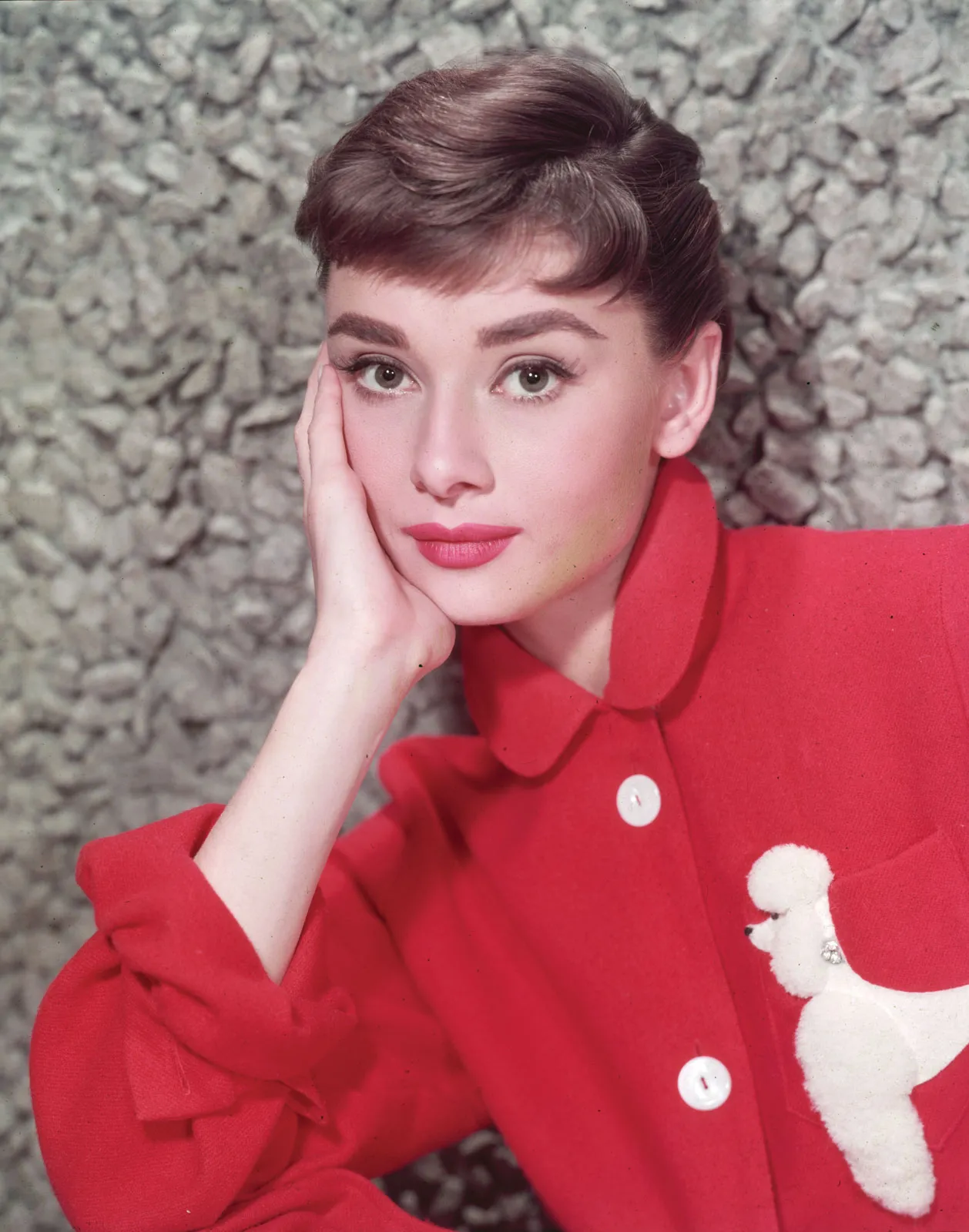
Audrey Hepburn, star of classics like 'Breakfast at Tiffany's' and 'Roman Holiday,' had turned down one of the most talked-about roles of the 1950s because of her own personal trauma.
Hepburn was 10 when the war began in 1939, and she lived in the Netherlands throughout the conflict. In Wendy Holden's 2026 biography 'Intimate Audrey,' the actress's son Sean Hepburn-Ferrer says his mother came close to starving to death during this period, and that the sudden disappearance of people from her life left her with a lasting fear. Her uncle Otto, who was shot in retaliation for a resistance sabotage act, was one of those losses.
A year after the war ended, in 1946, a publishing house editor gave Hepburn an early draft of Anne Frank's diary; the book was published in the Netherlands in 1947. According to Hepburn-Ferrer, his mother told him Frank had written down "everything I had lived through and felt."
So when she was offered a role in the 1959 adaptation of 'The Diary of Anne Frank,' she thought long and hard about it. The offer came from director George Stevens, who had followed Hepburn since 'Roman Holiday' (1953) and 'Sabrina' (1954); the actress reread the book and, according to her son, was "shattered all over again," experiencing recurring nightmares.
Hepburn's words, as relayed by her son: "The war left me with a deep knowledge of human suffering that many young people never gain. What I saw during the occupation made me very realistic about life, and I've been that way ever since."
The role of Anne Frank eventually went to Millie Perkins. The film received eight Oscar nominations and won three: Best Supporting Actress for Shelley Winters, plus Cinematography and Art Direction.
Hepburn, meanwhile, starred that same year in 'The Nun's Story' (1959), earning her third Oscar nomination and second BAFTA. She went on to appear in 'Breakfast at Tiffany's' (1961), 'Charade' (1963), 'My Fair Lady' (1964), 'Two for the Road' (1967), and 'Wait Until Dark' (1967). Her final film role was in Steven Spielberg's 1989 film 'Always.'
Later in her career, she turned to humanitarian work and became a UNICEF Goodwill Ambassador. In that role, she traveled to Somalia in 1992; upon her return, she was diagnosed with a rare form of abdominal cancer. Hepburn died in January 1993 at the age of 73.