"The Shards" Review: Ryan Murphy's Serial Killer Thriller Stays in the Shallow End
According to TIME critic Judy Berman, Murphy and Bret Easton Ellis's FX series, despite its eye-catching production and pile of references, never reaches the depth it's trying to convey.
 IMDb5.8/10
A fruitful collaboration between Ryan Murphy and Bret Easton Ellis seems both inevitable and impossible. Murphy is a maximalist in every sense: a super-producer who churns out show after show, has his characters loudly say the parts of every story that ought to stay quiet, and is one of television's most effective champions of inclusive, identity-politics-driven programming. Ellis is known for the minimalist style of his generation-defining debut novel 'Less Than Zero,' and more recently for his period as a culture warrior railing against the entertainment industry's "fake-woke corporate culture." Yet both are names unafraid to provoke, both obsessed with the psychology of psychopathic killers and the permeability between popular culture and real life. Having been born on the cusp of Boomer and Gen X, they also both remember what it was like to grow up gay in the '80s.
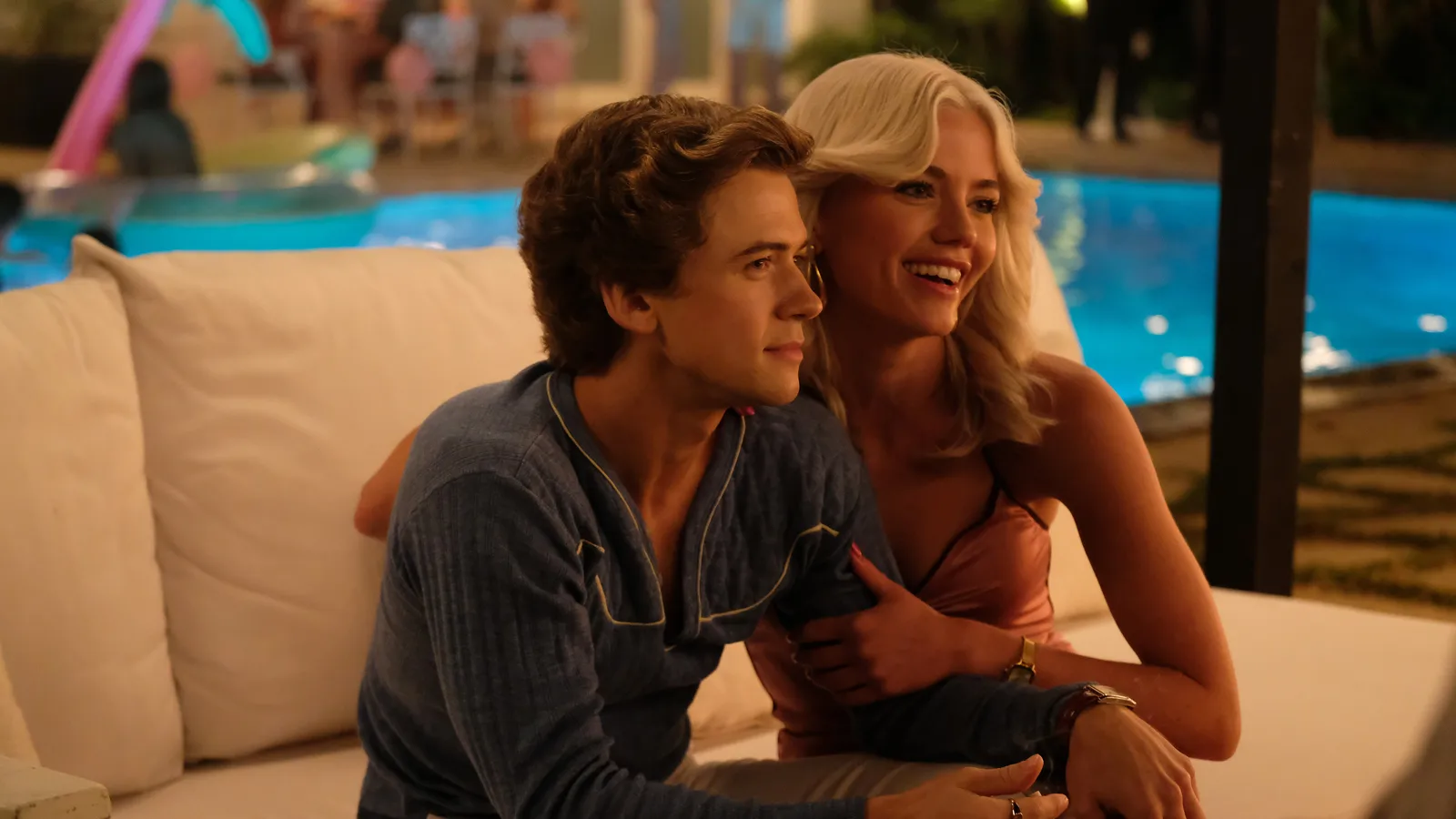
In 'The Shards,' adapted from Ellis's 2023 novel, this synergy of experiences dominates the clash of their sensibilities without erasing it. On the surface, it's the autofictional but familiar tale of a serial killer preying on students at Ellis's high school in 1981; Murphy's trademark slick production design, genre pastiche and grand set-pieces shine through. Yet the series, which premiered on FX and Hulu on August 5 with two episodes, clearly has bigger ambitions: it references cultural touchstones of the era and, through present-day Bret's voiceover, tries to say something profound about the passage from adolescence to adulthood. Whether you blame a mismatched creative team or the visual medium's tendency to favor images over ideas, shallowness wins out in the end.
Senior year is starting, and the group's parents have already exited the stage. (Bret's are apparently vacationing abroad.) That suits the chain-smoking teens who roam the city under no curfew or restriction, performatively jaded at white-tablecloth restaurants. Only Debbie's horrific family enters the frame. Her father Terry (Wes Bentley) is a cliché predatory producer with eyes for underage boys; her mother Liz (Evan Rachel Wood) self-medicates with drugs, alcohol and outbursts of rage, a preview of Debbie's own future. The household's fourth member is Terry's androgynous aesthete assistant Steven (Jordan Roth), who lurks around the edges.
When a girl's dismembered body is found tied to a tennis net and classmates start disappearing, these are the adults the teenagers have to work with. Bret is convinced the handsome new kid at school, Robert Mallory (Homer Gere), is the killer — but his reasoning is thin: Robert simply denies having been at the screening of 'The Shining' where Bret first spotted him. For some reason Bret can't get his friends to care about the murders; they're too busy with prom and dance-competition schedules.
'The Shards' is dense with references. To read beyond the plot, you need to know that 'The Shining' is the story of a writer driven violently insane, that 'Chinatown' is a synonym for systemic evil too entrenched to fight, and that Michael Cimino's 'Heaven's Gate' fiasco symbolized the end of New Hollywood's director-driven era. The casting piles on further layers of meaning: Kaia Gerber is an eerie doppelganger of her mother, the ultimate Gen X beauty Cindy Crawford; Homer Gere shares the same square jaw as his father, Richard — and Richard Gere was married to Crawford in the early '90s.
Since most of that meaning rests on references most viewers under 40 will miss, Murphy and Ellis have essentially made two shows in one: a hokey teen murder soap in the vein of 'Riverdale'/'Pretty Little Liars,' and something more layered and harder to define aimed at older viewers. Only the latter feels new, but its more thoughtful elements are consistently sidelined. Lines like the narrator's "Matt never felt about me the way I felt about him, which would become a recurring theme for the rest of my life" spark curiosity: older Bret's sorrow, his anger at the precocious young Bret who traded away childhood innocence for an adult writing career without gaining the self-knowledge that comes with true maturity, surfaces but never quite pierces through.
The show unravels in its final episodes. In one, it plays on the name of the Hamburger Hamlet where the teens hang out, drawing such overwrought parallels between the characters and Shakespeare's tragic figures that not even self-awareness can save it. The bigger disappointment is the narratively muddled bombshell finale: it fizzles instead of exploding. The psychological climb meant to carry us there never quite happens. A show that recounts the consequences of limited introspection ends up experiencing those very consequences itself.