
"Star City" — For All Mankind's Gripping Spinoff Weaves Cold War Paranoia into Sci-Fi
Starring Rhys Ifans and Anna Maxwell Martin, this For All Mankind spinoff explores the Soviet space program under the shadow of the KGB, opening the door to a darker, more psychological kind of science fiction.
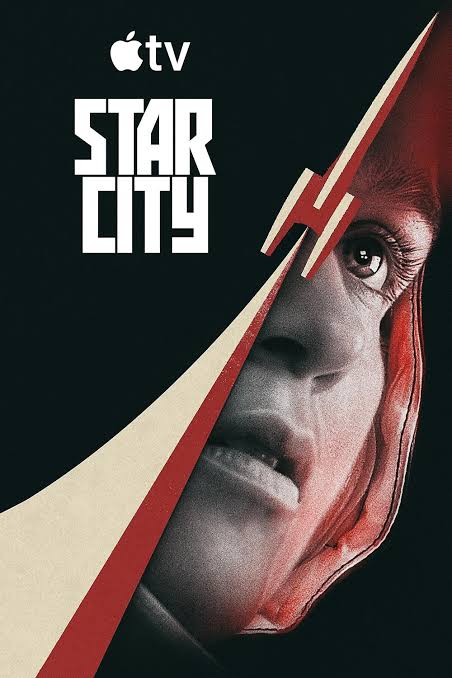
For All Mankind's alternate-history premise has always felt closer to a wish list than a fully convincing world. In the Apple TV series' universe, the USSR beat the U.S. to the Moon, and that shock set off a domino effect that eventually led NASA to build an all-female astronaut corps. Over the decades, racial and gender equality advance far faster than in our own timeline; by the 1990s, humanity has settled the Moon and Mars, and the U.S. has a lesbian president. The show's unofficial mission has always been to chart a realistic path toward Star Trek's utopian future — sometimes it felt like propaganda for an America that doesn't exist.
The new spinoff Star City rewinds the clock, telling the earliest years of that timeline from the other side of the Cold War. Opening with the 1969 Soviet Moon landing, the series plunges us into a world very different from For All Mankind's bright, optimistic atmosphere: KGB paranoia sits at the story's center just as much as the cosmonauts' heroics. The same core team — Ronald D. Moore, Ben Nedivi and Matt Wolpert — trims away the soap-opera elements this time in favor of a tight, psychological drama. The sci-fi competence-porn is still there, but under a much more oppressive atmosphere.
Leading the cast, Rhys Ifans gives a Gary Oldman-caliber, mournful performance as the space program's brilliant but underappreciated Chief Designer. He's constantly fighting off interference from the KGB and the government. Opposite him, Anna Maxwell Martin — known to British TV audiences from Line of Duty — plays Lyudmilla Raskova, a chillingly ruthless KGB officer. She runs the airless surveillance office in the basement of Star City, where young women spend hours transcribing recordings from bugs planted in people's homes. Ambitious Irina Morozova (Agnes O'Casey) has to report on the private lives of cosmonaut Valya Mironov (Adam Nagaitis) and his wife Tanya (Ruby Ashbourne Serkis) to stay in Raskova's good graces.
The inevitable comparison to For All Mankind makes for a fascinating look at how the two shows line up as feminist science fiction. In the original, women tore down a system's prejudices and changed the world; Star City's starting point is different. In the early 1970s, the USSR's space program is still male-dominated; but the KGB offices and the female cosmonaut program — especially through Alice Englert's shy Anastasia Belikova — paint a nuanced picture where women face obstacles that are sometimes greater than, sometimes on par with, their American counterparts. Valya can't see how unhappy his wife Tanya is, trapped in her life at the research base; Anastasia, meanwhile, gets promoted not despite her loyalty to the state but because of it, only to find herself locked in an entirely different kind of cage.
Star City quickly proves itself an ideal spinoff: it borrows its predecessor's strengths while standing on its own as an independent drama. Since we already know the broad decades-long chronology of the space race, the show has no choice but to focus on the parts of the Soviet program the outside world never saw — which leads the writers to invent a breathless secret program that forms the backbone of season one. Avoiding obvious pitfalls like fake Russian accents, and drawing a clear line between the flaws of the Soviet system and the ordinary people caught inside it, this production is shaping up to be one of Apple TV's best science-fiction efforts in years.