"Cape Fear" — The Apple TV Adaptation Loses Itself While Chasing Its Predecessor
Starring Javier Bardem and Amy Adams, the 10-episode Apple TV adaptation is an uneasy thriller that both imitates and tries to escape Scorsese's classic, never quite finding its own tone.
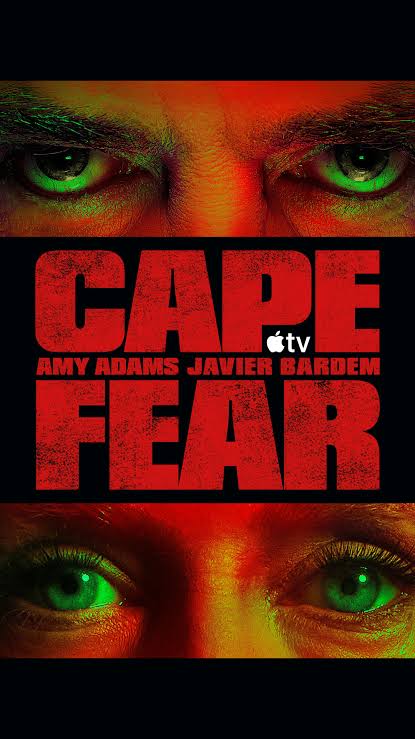
It's already unfair to ask any actor to step into a role previously played by Robert De Niro — especially when that character is Max Cady. In the violent 1991 Cape Fear, De Niro mixed such a potent dose of arrogance, rage and Southern charm into Cady that the character managed to be both terrifying and impossible to look away from. Created by Nick Antosca (Channel Zero, A Friend of the Family), the new 10-episode Apple TV miniseries puts Javier Bardem into that seat.
Bardem is a good actor experienced at playing difficult figures — this is, after all, the man who created Anton Chigurh. As Cady, he's manipulative, unsettling, seductive and slippery. But his performance never has the laser focus De Niro's did; it wobbles around, even down to the accent. A performance rooted mostly in Spanish-inflected speech occasionally slips into a Southern drawl, occasionally into something closer to Mare of Easttown. You always feel Bardem is acting; with De Niro, that was never the case.
Antosca and his writers have made serious additions to the story in order to stretch the 128-minute original film out to nearly 10 hours. In this version, Cady is a man accused of murdering his wife and son, whose conviction was overturned on appeal. The head of the family is a woman this time: Anna Bowden (Amy Adams), who represented Cady in his murder trial and now works at a fictional nonprofit called the Southern Justice Legal Project. Her husband Tom (Patrick Wilson) was the prosecutor on that case — meaning Cady has a score to settle with both of them. Their teenage daughter Natalie (Lily Collias) and stepson Zack (Joe Anders), grappling with deep depression, open up new digital avenues for Cady to worm his way into their minds.
The show's real problem shows up right in this expansion. Everyone is trying so hard to "get it right" that the effort overshadows the storytelling. Adams' performance is solid; the razor-sharp scene where Anna confronts the CEO of a private prison is one of the year's most satisfying moments. But the character is so closed-off that you never fully get to know her. Collias and Anders, meanwhile, feel like they belong in a different show altogether, two quiet teens who could live without the Max Cady anxiety hanging over them. The visual language borrows directly from Scorsese — Hitchcockian rapid zooms, X-ray lighting, and a Bernard Herrmann-style score; even the famous scene of De Niro laughing in the movie theater has been re-shot here with light touch-ups — a choice I don't think should have been made.
Some film-to-series adaptations, Fargo chief among them, have managed to wink at their source material while still building an independent drama. Cape Fear doesn't have that same creative courage. It's not bad — but I expected a bit more, counselor.